AI Restrictions in Schools: A State-by-State Guide for Parents
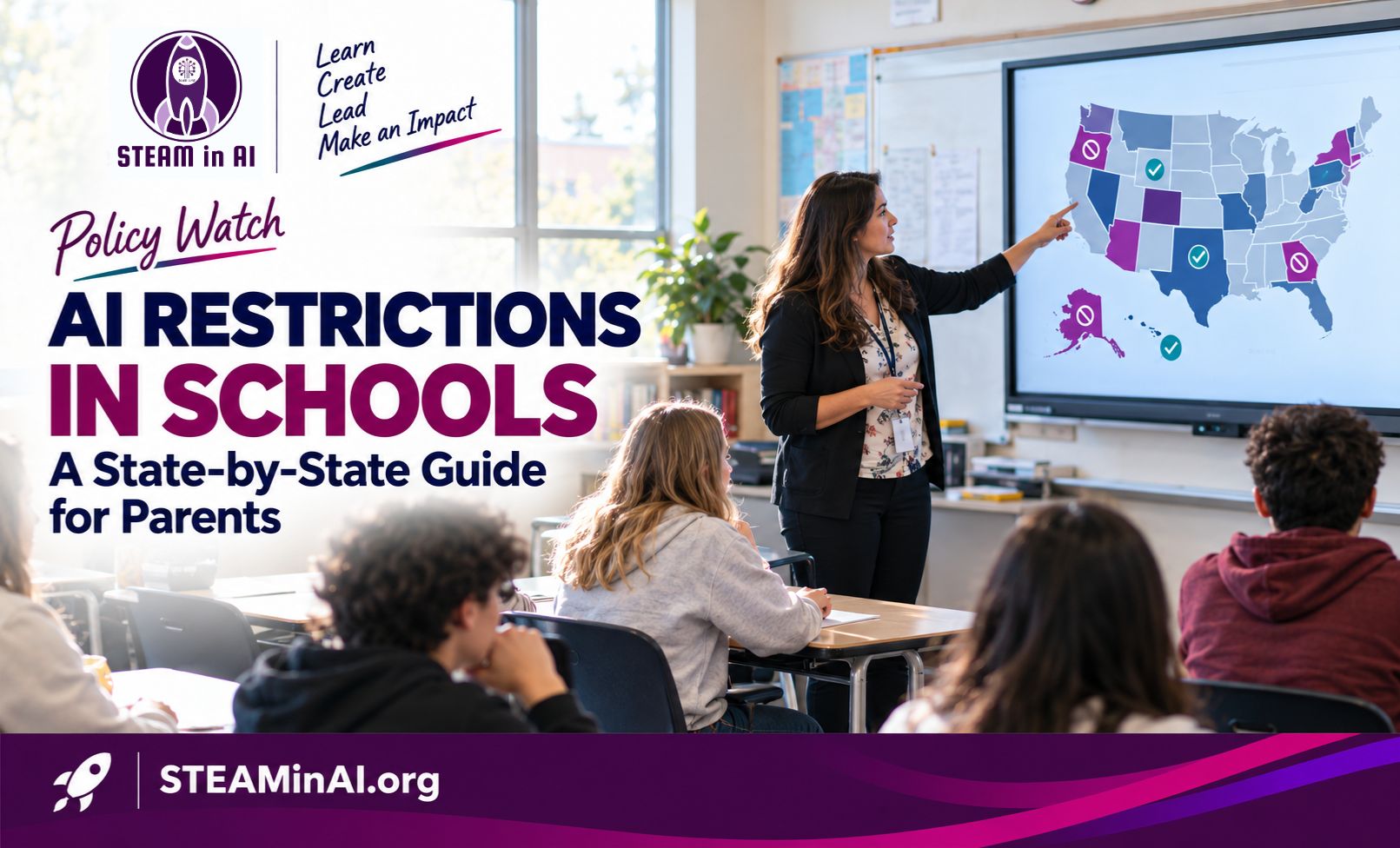
This school year, four states have taken four genuinely different approaches to AI in the classroom — and the differences matter more than the headlines suggest. If you’re a parent trying to figure out what your student can and can’t do with AI at school, here’s what’s actually happening, state by state.
California: Safeguards and a District Pause
Governor Newsom signed two bills this year, SB 813 and AB 1405, establishing AI safeguards and auditor oversight at the state level. Separately, Los Angeles Unified School District is restricting student access to generative AI platforms while it reviews safety measures — though students 13 and older may eventually get access to approved tools after completing digital citizenship instruction. In practice: state-level guardrails going up, while the largest district in the state is still figuring out what to allow.
New York City: A Moratorium, Plus Mandatory AI Literacy
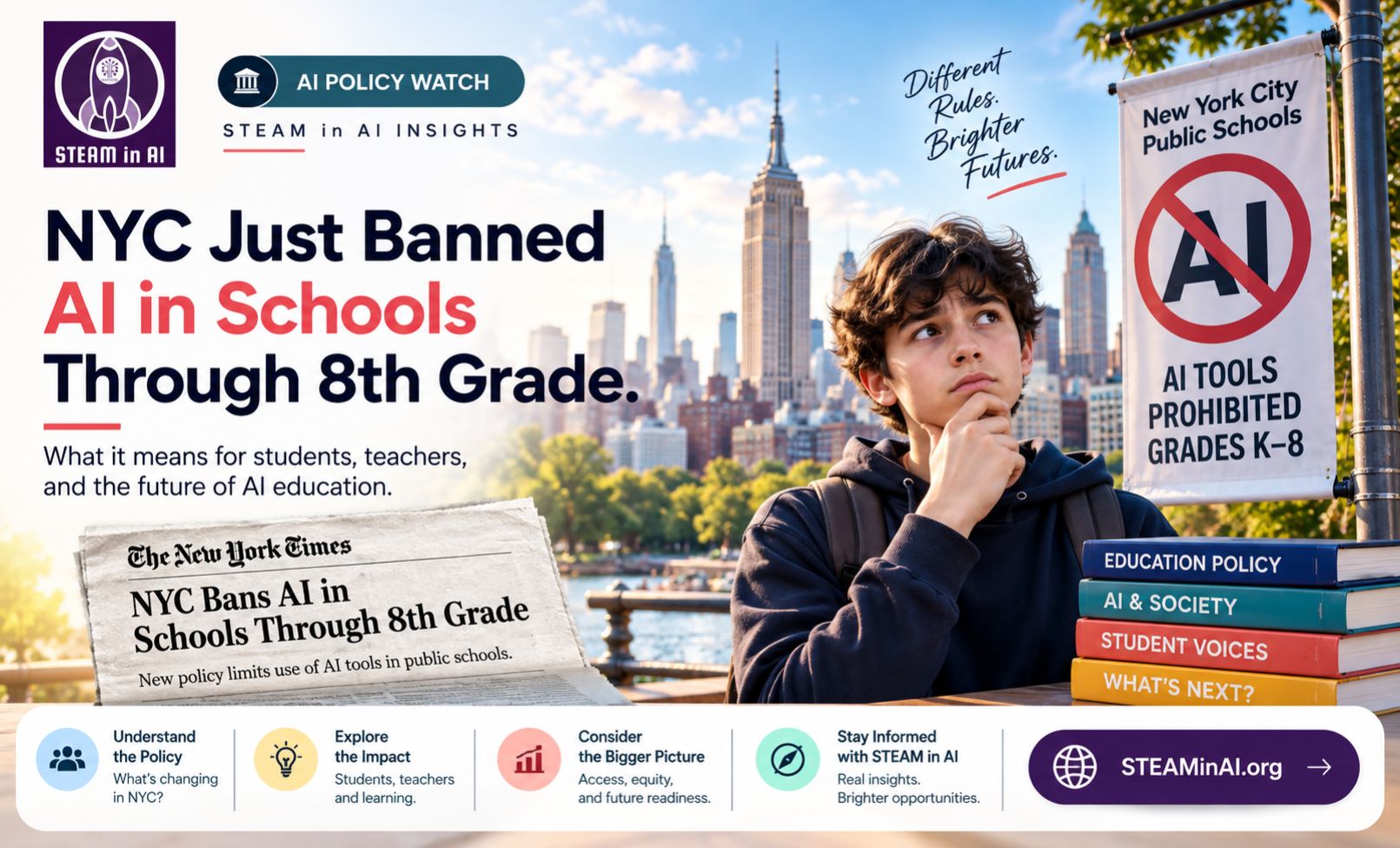
NYC went further: Mayor Mamdani and Schools Chancellor Samuels implemented a classroom AI moratorium alongside new screen-time limits for the 2026–27 school year. But the city didn’t stop at restriction — it also mandated AI literacy modules for high schoolers twice a year, covering bias, risk, ethical considerations, and career impact. We covered the mechanics of this policy in detail in our breakdown of the NYC AI ban.
Arizona: Teach It, Don’t Just Restrict It
Arizona’s House Committee on Artificial Intelligence passed HB 4005, which takes a different tack entirely: it requires school districts to actively teach the “ethical, moral and educational uses” of AI, with schools submitting annual compliance reports by October 15. Rather than limiting exposure, Arizona is betting that structured instruction is the safer path.
Illinois: A 400-Page Guidance Package
Illinois’s State Board of Education released extensive guidance emphasizing that AI “may assist with planning, access, feedback, communication, operations, and resource development, but it must remain a means to inform teaching and learning rather than a substitute for educator judgment.” It’s the most permissive of the four approaches — AI as a tool teachers actively use, not something to be walled off.
What This Actually Means for Your Student
Whatever your school district decides, it’s making a decision about classroom use — not about whether your student should understand AI at all. A student in a restrictive district and a student in a permissive one can end up in the same place: building real AI projects outside school hours, with guidance, so the gap between “what’s allowed at school” and “what the world will expect at work” doesn’t become their problem to solve alone.