How to Get a Research Mentor in High School (One Cold Email Reached an MIT Professor)
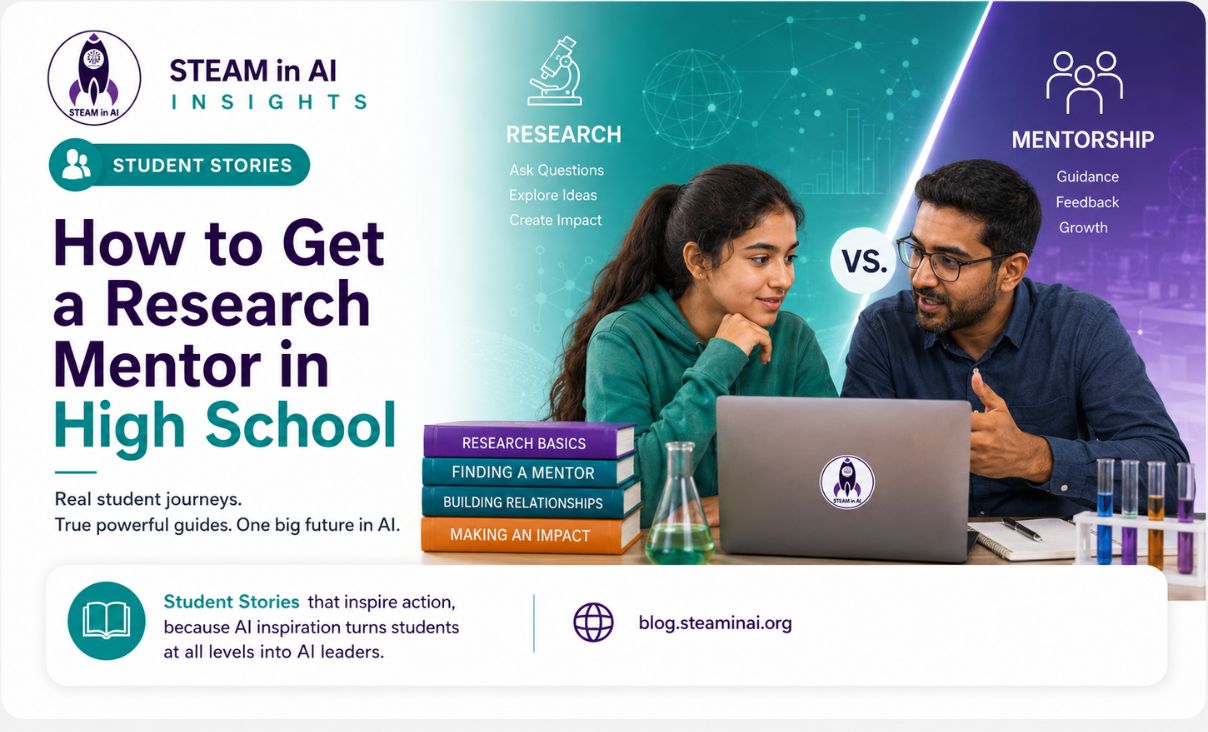
The fastest way for a high school student to get a research mentor is simpler than most families think: cold email professors and scientists — with a short, specific message built on real work. It sounds unlikely. But it is exactly how two-time ISEF Grand Award winner Ameya Kharade, a recent guest in our Live Lab series, found not one but two research mentors before finishing high school.
Watch the highlight from Ameya’s Live Lab session:
▶️ Watch Ameya tell the story (1 min) — on our YouTube channel
Can a high school student really email an MIT professor?
As a sophomore just getting started in science fairs, Ameya cold-emailed an MIT professor who happened to live about 40 minutes away. What followed was not just a polite reply — it became a genuine mentorship. The professor introduced Ameya to computational oncology and Alzheimer’s research, and drove to Ameya’s house every other week to work together. “We had a really close bond,” Ameya told our students. “And it was crazy, ’cause all this happened off of a cold email.”
Full Live Lab replays are free for a limited time at steaminai.org/labs/watch.
And it was not a one-time fluke. When Ameya later developed a project on brain aging, another round of cold emails connected him with a University of Pittsburgh neuroscientist — who also became a biweekly collaborator. Two cold emails, two real research mentorships, two award-winning trajectories.
One honest caveat, straight from Ameya: cold emailing is probably less effective today than it was a few years ago — inboxes are fuller, and AI-written outreach has made researchers warier. Which means how you do it matters more than ever.
Why do professors respond to high school students at all?
Professors are busy, but they are also human: they respond to genuine, specific curiosity about their own work. A high school student who has actually read a researcher’s paper and asks a real question about it is rare enough to be memorable. The email does not succeed because of polish. It succeeds because of evidence that the student did the work first — the same currency that now decides college admissions, where polished writing is cheap in the age of AI and real work is expensive. As Ameya put it, mentorship from a scientist who has been through the field is one of the most valuable accelerators a student can have.
How to write a cold email to a professor (4 parts)
1. One line on who you are. Grade, school, and the one thing you are genuinely into. No résumé recitation.
2. Proof you did the homework. Name the professor’s specific paper or project and say what caught your attention — a result, a method, a question it left open. This single sentence separates your email from a hundred generic ones.
3. One clear, small ask. Not “can I join your lab.” Ask a question about the work, or ask for 15 minutes of advice on a project you are building in the same area. Small asks get answered; big asks get archived.
4. Something to point to. A project, an analysis, a competition entry, even a thoughtful write-up — link it. This is your evidence. Then send more than one: ten genuinely personalized emails beat a hundred templated ones, but one email alone is a lottery ticket.
What should you do before sending anything?
Notice what made Ameya’s emails work: there was already something behind them. The first came from a sophomore actively competing in science fairs; the second came attached to a real project on brain aging. That is the order of operations most families get backwards. The email is not the starting point; the work is. The email is just how the work introduces itself.
Ready to build the “something real”?
That is exactly what the STEAM in AI Intensive exists for: one student, one mentor, one genuine AI project — built or researched from the student’s own interests. Cohorts run twice a year and seats fill early — check the current cohort deadline and apply at steaminai.org. Every student starts with a complimentary 45-minute AI Project & Fit Assessment — interests, project ideas, Build vs. Research pathways, competitions, and admissions goals. If we are not the right fit, we will tell you.
Related reading: AI Research vs. AI Build: which path fits your student? · How a high school AI project strengthens college applications