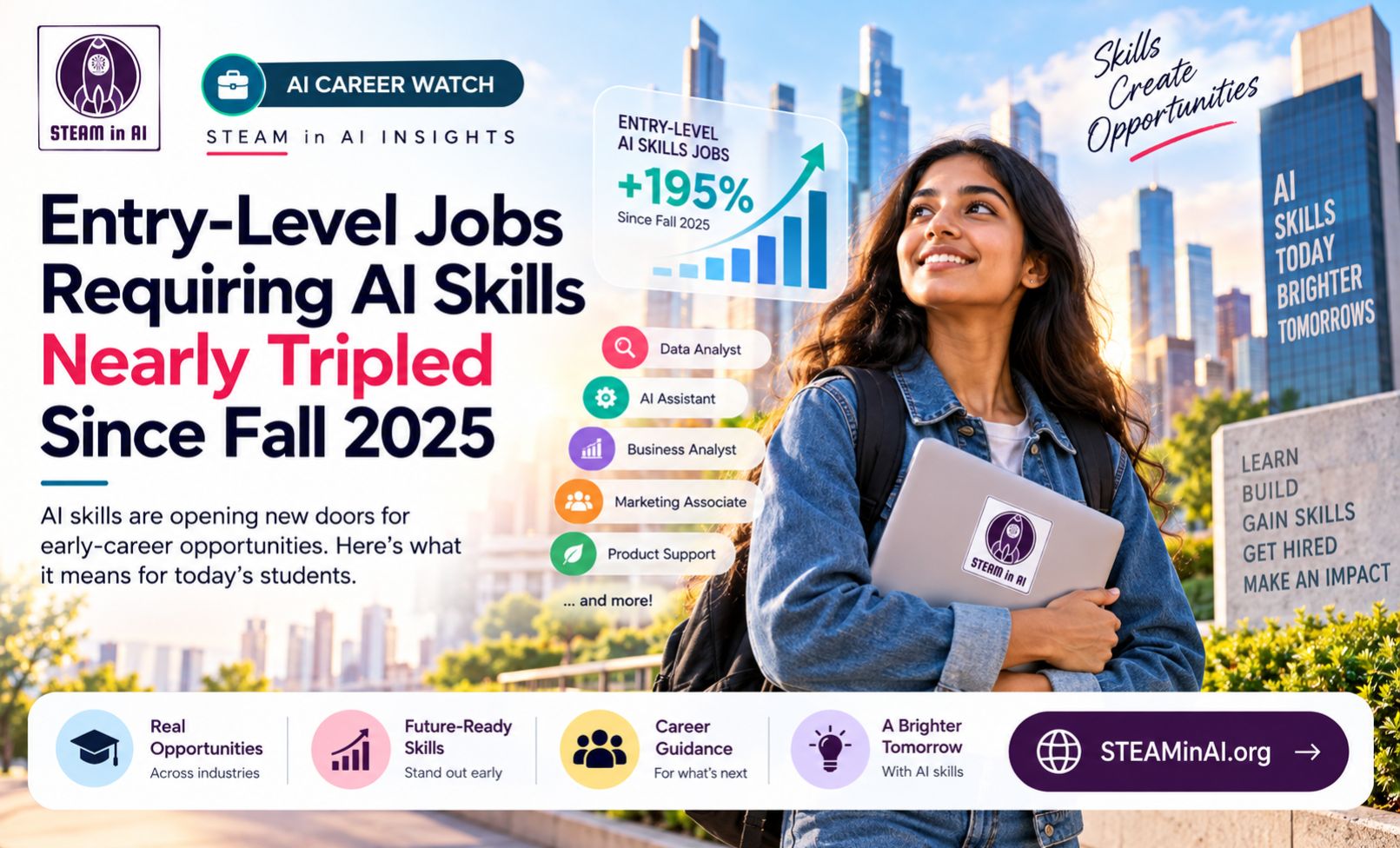
AI Skills for Entry-Level Jobs Just Tripled in Demand, NACE Data Shows
New data on AI skills for entry-level jobs confirms a shift we’ve been tracking all year at STEAM in AI: more than a third of entry-level job postings now require AI skills — nearly triple the share reported just six months earlier, in fall 2025.
The Numbers Behind the Shift in AI Skills for Entry-Level Jobs
The findings come from NACE (the National Association of Colleges and Employers) Job Outlook 2026 Spring Update, a survey of 185 employers (142 NACE member organizations, 43 non-members) conducted February 12–March 17, 2026, sponsored by Jobscan.
A few numbers worth sitting with:
- 28% of employers are now actively seeking early-career talent specifically for AI capability
- Nearly 60% of employers assign interns projects that use AI tools and skills
- Only 11% of employers are discussing AI in the context of replacing entry-level positions — most are focused on how it changes the tasks within a job, not the job itself
- Just over a quarter of employers say AI has reduced the number of tasks entry-level workers need to do; more than half say it hasn’t
NACE’s own framing is the headline worth remembering: AI is reshaping — not replacing — early-career talent and the skills needed to succeed.
What the AI Skills for Entry-Level Jobs Shift Means for Your Student
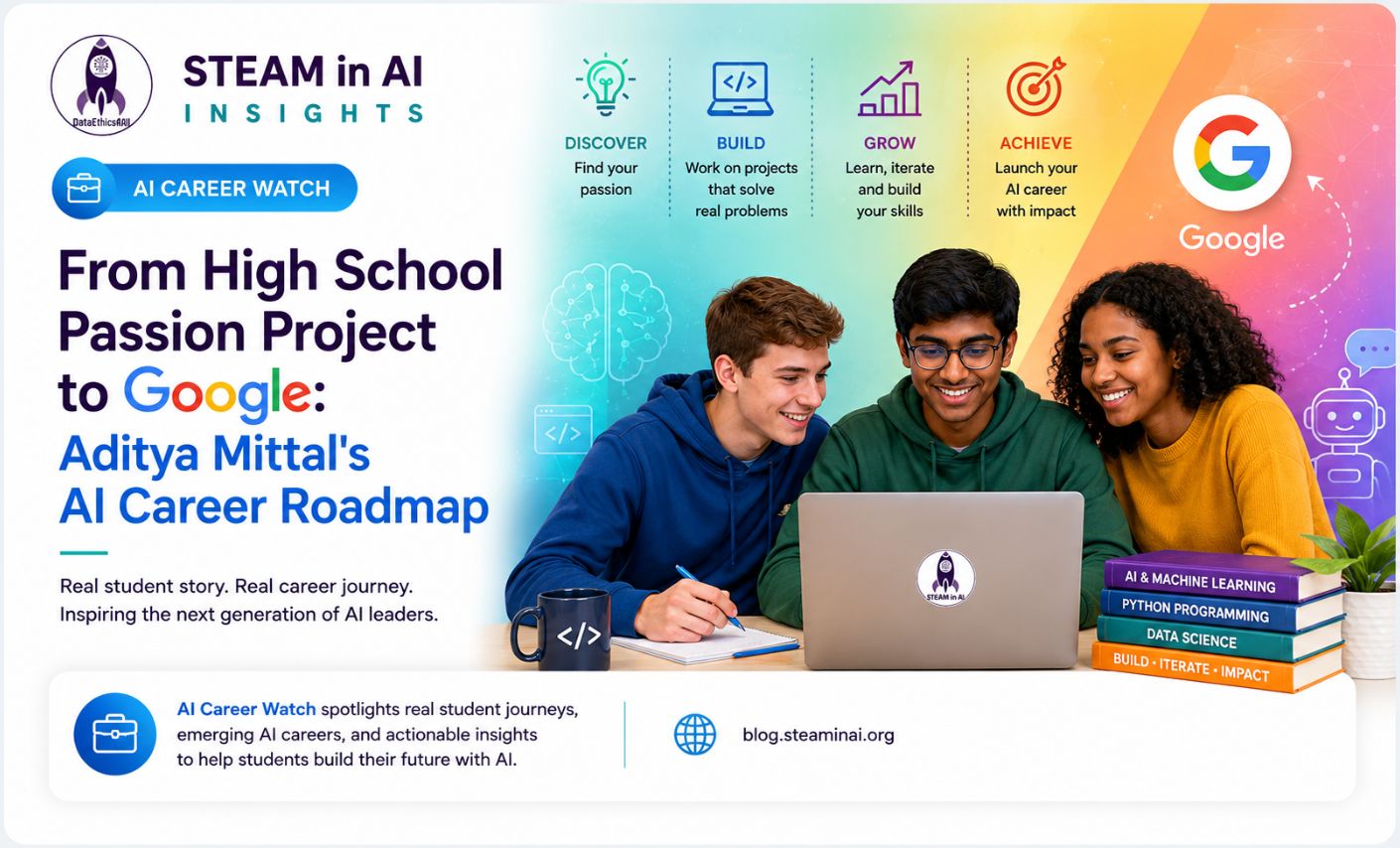
This is the same shift we’ve tracked all year in real student outcomes — employers aren’t asking whether a candidate has used AI tools anymore. Everyone claims that now; familiarity is assumed. What they’re checking for is whether a candidate can point to something they actually built or shipped with it. Our own Aditya Mittal’s path from a passion project to Google is a case study in exactly that.
That bar is moving down into college admissions, and preparation for it is moving down into high school. A student with one real, defensible AI project — something they can explain, defend, and point to — has an answer ready for a question now showing up in a third of entry-level job postings, nearly three times more often than it was six months ago.
The earlier a student builds that evidence, the earlier “have you built something with AI” stops being a source of anxiety and starts being their strongest answer — in a college application, an internship interview, or eventually a job market checking for it at this rate.
If your student wants to start building that evidence now, our free 45-minute AI Project & Fit Assessment is the place to start — interests, project ideas, Build or Research track, competitions, admissions goals. If we’re not the right fit, we’ll tell you.
Source: NACE, “Demand for AI Skills in Entry-level Jobs Nearly Triples Since Fall 2025”
Frequently Asked Questions
According to NACE data, employer demand for AI skills in entry-level positions has tripled. This reflects a fundamental shift in what companies expect from new hires, even those straight out of college or high school programs.
Increasingly, yes. Employers across industries are listing AI literacy, data analysis, and machine learning familiarity as preferred or required skills for roles that previously had no technical prerequisites. Students who graduate without any AI exposure face a narrower job market.
Employers value practical AI skills such as prompt engineering, data analysis, basic machine learning concepts, AI tool proficiency, and the ability to apply AI to real business problems. Theoretical knowledge alone is less valued than demonstrated project experience.
Students can build AI skills through mentored project programs, online courses, competitions like science fairs with AI components, and self-directed projects using accessible tools. The key is producing a tangible outcome, such as a working prototype or research paper, that demonstrates applied understanding.
The tripling of AI skill demand means students entering college without AI exposure are already behind their peers. Building AI project experience in high school gives students a competitive advantage in college admissions, internship applications, and eventually the job market.